Gallbladder Surgery
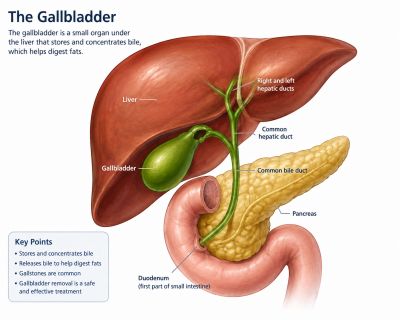
The gallbladder is a small organ located beneath the liver that stores bile produced by the liver. Gallbladder problems are common and are most often caused by gallstones, which can lead to pain, inflammation, infection or blockage of the bile ducts.
For patients who require surgery, removal of the gallbladder — known as a cholecystectomy — is usually performed using minimally invasive or keyhole surgery.
When and who might gallbladder surgery be needed?
Gallbladder surgery may be recommended for conditions including:
- Symptomatic gallstones, particularly recurrent episodes of upper abdominal pain
- Acute or chronic cholecystitis (inflammation of the gallbladder)
- Gallstones causing pancreatitis
- Stones that have passed into or obstructed the common bile duct
- Gallbladder polyps, depending on their size and other features
- Selected patients with suspected or confirmed gallbladder tumours or cancer
Not everyone with gallstones requires surgery. The decision depends on your symptoms, imaging findings, previous complications and overall health.
Most gallbladder removal operations are performed by laparoscopic (keyhole) surgery. Several small incisions
How is gallbladder surgery performed?
Most gallbladder removal operations are performed by laparoscopic (keyhole) surgery. Several small incisions are made in the abdomen, allowing the gallbladder to be carefully separated from the liver and removed.
In selected circumstances, robotic surgery may also be considered (Cosmetically better). Open surgery is occasionally required, although extremely rare nowadays, when this provides the safest approach, particularly in patients with severe inflammation, complex anatomy, previous surgery or suspected cancer.
The most appropriate approach is determined individually rather than using the same technique for every patient.
After gallbladder surgery
What happens to digestion after gallbladder removal?
The gallbladder is not essential for normal digestion. After it is removed, the liver continues to produce bile, which flows directly into the intestine.
Most patients can return to a normal diet following recovery. Some people experience temporary changes in digestion or bowel habits, particularly with fatty foods, but these commonly improve with time.
Recovery after keyhole gallbladder surgery
Recovery varies between individuals and depends on the severity of the gallbladder condition and the complexity of surgery. Many patients undergoing uncomplicated keyhole gallbladder surgery can leave hospital on the same day or the following day.
Walking and light activities are encouraged soon after surgery. Return to work and normal activities varies according to the individual, their occupation and their recovery.